
You Focus on Recovery,
We’ll Focus on the Fight
We’ll Focus on the Fight



FOR FARMINGTON HILLS, METRO DETROIT, AND MICHIGAN CAR CRASHES:
At the Davis Law Center, we recommend the following after a car crash
1. Immediate Safety & 911
The scene of a crash is a high-risk environment for secondary accidents. We have handled numerous cases where someone was involved in a crash, got out of their vehicle, and was struck by another vehicle.
Move to Safety: If the vehicles are drivable and in the path of traffic, move them to the shoulder. If you cannot move the car, stay inside with your seatbelt fastened until help arrives.
Call 911: We recommend always calling the police, even for a "fender bender." A police report is the most credible piece of evidence in an insurance claim and will preclude the insurance company from arguing the accident never happened.
Check for Injuries: Check yourself, your passengers, and the other driver. Do not attempt to move anyone who is unconscious or complaining of neck/back pain unless there is an immediate threat like fire.
2. The Information Exchange
While waiting for the police, and if you are able, obtain the other driver's name, address, and phone number, insurance information, and the names and numbers of any witnesses to the crash.
3. Document the Scene
Before the cars are towed and debris is cleared, use your phone to take photos of damage to all vehicles involved, not just yours. If possible, also take photographs of the the intersection, traffic signs, skid marks, and any road hazards (ice, construction, etc.).
The Other Driver: Photograph the other driver’s license and insurance card to ensure accuracy.
Dashboard/Dashcam: If you have a dashcam, save the footage immediately. Take a photo of your dashboard if any warning lights or the speedometer are frozen.
4. Medical & Insurance (Michigan Specific)
Since Michigan is a No-Fault state, your own insurance usually pays for your medical bills regardless of who caused the crash.
Seek Medical Care Immediately: Even if you feel fine, symptoms of whiplash or internal trauma can take 24–48 hours to appear.
File a PIP Claim: In Michigan, you must file a Personal Injury Protection (PIP) claim with your own insurer to start receiving medical benefits.
Note the Police Report Number: Ask the officer for the "Incident Report Number" so you can order the full report later.
⚠️ Crucial: Davis Law Center's Recommendations on What NOT to do
Saying "I’m sorry"
When speaking with the other driver, police, or emergency personnel, never say "I'm sorry" or admit fault as oftentimes an accident happens so quickly that you may not know exactly what happened or whose fault it really was. In addition, the other driver's insurance company will use this against you during the claims process, throughout litigation and at trial.
Accepting cash at the scene
Hidden damage to your car or body could cost thousands more than what they offer you on the spot.
Speaking to the other insurer
The other driver's insurance adjuster may call you for a "recorded statement." You are not legally required to give one without an attorney, and at the Davis Law Center, we never recommend that our clients ever give a recorded statement.
Leaving the scene
Even for minor scratches, leaving can be classified as a "hit and run" in many jurisdictions, so stay until the police arrive, and a report is made.
FOR A FARMINGTON HILLS, OAKLAND COUNTY, AND MICHIGAN SLIP, TRIP OR FALL:
1. Immediate Physical & Safety Steps
Just as in a car crash, after a slip-and-fall, your health is the absolute priority. Even if you feel "fine," adrenaline can mask serious injuries like internal bleeding or concussions. Don't get up too quickly; take a moment to assess your body, as moving too fast can aggravate a spinal or joint injury.
Check for Pain or Numbness: If you feel severe back/neck pain or cannot feel your limbs, do not move and ask someone to call 911 immediately.
Accept Medical Help: If an ambulance is called or store employees offer first aid, accept it. This creates an immediate record of the incident.
2. Document the Scene.
Slip and fall cases in Farmington Hills and throughout Michigan are very difficult. Because of this, we at the Davis Law Center believe it is very important to document the incident as the scene of a fall changes quickly—spills are mopped up, and ice melts. If you are physically able (or can ask a witness to help), try and do the following:,
Photograph the hazard: Take clear photos and videos of exactly what caused the fall (e.g., a wet floor with no sign, a jagged sidewalk, a loose rug).
Capture the Surroundings: Take clear photos and videos depicting the lighting, any surveillance cameras that might have captured the incident, snow and ice conditions, any nearby warning signs (or the lack thereof), and the general layout of the area.
Identify Witnesses: Ask anyone who saw the fall for their name and phone number. Their neutral account is often more powerful than yours in a legal setting.
3. Official Reporting
We also believe it is extremely important to immediately report the incident to the property owner before leaving the premises. Speak to the store manager, landlord, or property owner, file a written report describing what happened and where, and request a copy. If you do not notify anyone before leaving, the property owner may very well take the position that the incident never happened, which could negatively impact your claims.
4. Preservation of Evidence
The clothes and shoes you were wearing are physical evidence.
Save Your Footwear: The condition of your soles can prove you had proper traction. Place the shoes in a bag and stop wearing them until your claim is resolved.
Don't Wash Your Clothes: If you fell in oil, grease, or water, the stains on your clothing are proof of the hazard. Store them in a sealed plastic bag.
5. Medical & Legal Follow-Up
See a Doctor within 24 Hours: Many injuries, such as soft tissue damage or TBIs, don't show symptoms immediately. A gap in treatment is the #1 reason insurance companies deny claims. We also recommend keeping a pain diary, documenting your daily symptoms, missed work days, and how the injury affects your life (e.g., "Cannot lift my child," "Trouble sleeping").
Consult an Attorney: Before speaking to an insurance adjuster, consult a personal injury lawyer. They can help you avoid "lowball" settlements.
⚠️ Crucial: Davis Law Center's Recommendations on What NOT to do
Saying "I'm sorry"
Often viewed as an admission of fault (e.g., admitting you weren't looking).
Giving a recorded statement
Insurance adjusters may use leading questions to get you to downplay your injuries.
Posting on Social Media
Photos of you out with friends can be used to argue you aren't "really" injured.
Signing a Release
You may inadvertently sign away your right to future medical compensation.
If you can answer "Yes" to these three questions, we believe you most likely have a valid claim that warrants a professional review:
1. Was someone else even partially at fault? (In Michigan, as long as you are less than 50% at fault for car accidents and less than 51% at fault for other personal injury cases, you can still recover damages).
2. Did you seek medical treatment? (Insurance companies often deny claims if there is no immediate medical record of an injury).
3. Did the injury happen within the last 3 years? (This is the standard Statute of Limitations in Michigan for most personal injury cases).
Common Indicators of a Strong Case
At the Davis Law Center, we look for "strength indicators" that help us build a winning strategy:
Official Documentation: A police report or an incident report from a business.
Clear Evidence: Photos of the accident scene, vehicle damage, or visible injuries.
Objective Injuries: Medical imaging (MRIs, X-rays) showing fractures, herniated disks, or traumatic brain injuries.
Economic Impact: Verifiable proof of missed work and mounting hospital bills.
A Note on Michigan No-Fault: If you were in a car accident, you may be entitled to No-Fault benefits (like medical coverage and wage loss) through your own insurance regardless of who was at fault. However, to sue the other driver for "pain and suffering," your injury must meet a specific threshold, such as "permanent serious disfigurement" or "serious impairment of body function."
The best way to know if you have a valid personal injury claim is to speak with a lawyer who specializes in this area of the law.
In Farmington Hills, Oakland County, and the rest of Michigan, economic damages (medical bills, wage loss, co-pays, prescription expense, etc., as well as non-economic damages (pain & suffering) are potentially recoverable in most personal injury cases. Of course, there needs to be documentation to support these damages, such as medical records and bills, documents establishing missed time from work, etc. At the Davis Law Center, we gather all the information necessary to obtain maximum compensation for our client's economic and non-economic losses.
For most personal injury cases in Farmington Hills, Oakland County, and all of Michigan, a 3-year statute of limitations applies, meaning you would need to file a personal injury lawsuit within 3 years from the date of the incident or crash. There are exceptions for certain personal injury cases, such as No-Fault claims and medical malpractice, so it is best to consult with a knowledgeable attorney as soon as possible after an incident occurs.
"According to U.S. Department of Justice statistics and our 30 plus years of experience, nearly 95% of all civil cases are resolved through out-of-court settlements rather than a trial verdict. This is mostly because settlements avoid the time, expense, and uncertainty of going to trial and are not subject to reversal on appeal.
At the Davis Law Center, we attempt to negotiate with insurance companies from day one and throughout the litigation process to obtain the best and quickest resolution for our clients. Unfortunately, insurance companies do not always wish to negotiate in good faith. In those cases, a trial may be necessary to obtain the best result for our clients.
This depends on the type of personal injury case. If injured in a Farmington Hills or Oakland County car crash, your own health and/or auto insurance company is supposed to pay your medical bills, wage loss, and for assistance with household or personal care incurred as a result of the crash. For injuries other than car accidents, any medical expenses incurred would be part of your claims against the negligent tortfeasor.
Since Michigan is a Comparative Fault State, the answer is "Yes," depending on how much at fault you were. For automobile accidents, you can recover damages if seriously injured and not more than 50% at fault. For other personal injury cases, you can still recover damages as long as you were less thant 51% at fault. However, any damages you recover will be reduced by the amount of fault you were assessed. For example, if a jury awarded $100,000 for your damages but found you 40% at fault, the verdict would be reduced to $60,000.
While every personal injury case in Farmington Hills and Michigan is different, most cases resolve within one to two years. This is mostly in line with the Michigan Supreme Court's Administrative Order that 90% of civil cases should resolve within 364 days and 95% within 728 days. We at the Davis Law Center do everything in our power to try and resolve cases to our client's satisfaction in the least time possible.
Generally, photographs, incident or police reports, video, witness statements, expert analysis, medical records, and sworn testimony may all be crucial to your claims. After sustaining injury in a personal injury matter, we recommend speaking with an attorney as soon as possible to ensure all available evidence is obtained and preserved.
The Davis Law Center, led by founding attorney Neil Davis, brings over 30 years of specialized experience in personal injury law. While the firm has evolved over the decades, Neil Davis has been a member of the State Bar of Michigan since 1992, dedicating his entire career to advocating for the rights of the injured. This deep-rooted history in the Michigan legal community provides clients with several key advantages:
Three Decades of Litigation: With over 30 years in the courtroom, we have seen every tactic insurance companies use to minimize payouts.
A Proven Track Record: Since our founding, we have helped thousands of clients recover millions of dollars in compensation for car accidents, truck crashes, and wrongful death claims. In this regard, Neil Davis is a lifetime member of the Million Dollar Advocates Forum which is exclusive to attorneys who have obtained verdicts or settlements of $1,000,000 or more. Neil is also recognized by The National Trial Lawyers Top 100 Trial Lawyers.
Deep Local Roots: Based in Farmington Hills, we have a long-standing reputation with Michigan courts and medical providers, which helps us move your case forward efficiently.
Our firm was established on the principle that injury victims deserve "Big Firm" results with "Small Firm" personal attention. Unlike larger "settlement mills," the Davis Law Center has spent the last 30+ years ensuring that every client works directly with an experienced attorney, not just a legal assistant.
At the Davis Law Center, led by Neil Davis in Farmington Hills, we focus almost exclusively (99% of our practice) on helping victims of serious accidents and negligence. Here is a breakdown of the specific types of personal injury cases we handle in Oakland County and across Michigan.
MOTOR VEHICLE ACCIDENTS
This is our primary area of practice. We navigate Michigan’s complex "No-Fault" insurance laws to ensure victims receive proper benefits and that distracted drivers, drunk drivers, and negligent drivers pay for the harm they cause our clients. We have also been very successful litigating truck accidents, motorcycle crashes, pedestrian & bicycle accidents, and Rideshare accidents.
PREMISES LIABILITY (PROPERTY INJURIES)
We hold property owners accountable for failing to maintain safe environments that cause injury to our clients. This includes:
Slip, Trip, and Fall Accidents: Injuries caused by icy sidewalks, wet floors, or uneven pavement, and numerous other dangerous conditions that cause injuries to our clients.
Dog Bites: Injuries due to the negligence of dog owners in keeping their animals contained and restrained.
Negligent Security: Cases involving harm that occurs due to inadequate lighting or security at a business or complex.
SPECIALIZED & CATASTROPHIC CLAIMS
For injuries that require lifelong care or involve unique federal laws, we at the Davis Law Center have also succesffully litigated cases involving wrongful death, traumatic brain injuries maritime injuries (Jones Act) and Railroad injuries (FELA).
Over our 30 years, we have recovered millions of dollars for our clients. We have a very high success rate as recognized as a lifetime member of the Million Dollar Advocates Forum and as one of The National Trial Lawyers Top 100 Trial Lawyers.
At the Davis Law Center in Farmington Hills, the preparation process is designed to "uncomplicate" the legal system for the client. Attorney Neil Davis emphasizes direct communication and specialized evidence-building to ensure clients are not intimidated by insurance company tactics. Here is how we typically prepare clients for each stage of a personal injury case:
1. Preparation for Depositions
Pre-Deposition Meetings: You will meet with us beforehand to understand the deposition process and exactly what a deposition involves. We will review the facts of the case, your medical history, and the specific questions the defense is likely to ask. We will answer any questions you may have about the deposition process and will spend as much time with you as needed until you are completely comfortable and ready to testify.
2. Preparation for Negotiations
Our strategy is to negotiate from a position of strength so that "95% of cases settle without a trial.
We will obtain all your medical records and discuss with you, your friends, and family the full impact the injury has had on your life in order to present a demand package to the insurance adjuster or defense attorney.
If we participate in mediation or facilitation, we will prepare you for the process and ensure you are involved in the negotiations every step of the way. If a settlement offer is made, we will advise you whether it is fair, whether you should make a counter-demand, or whether you should hold out for trial.
3. Preparation for Trial
While most cases settle, the Davis Law Center prepares every case as if it is going to a jury to maximize settlement leverage. We will conduct mock "Direct Examination" and "Cross-Examination" sessions with you so you are comfortable speaking before a judge and jury. We will review exhibits with you (photos of the scene, medical charts, and expert testimony) that will be used to prove your case. We also handle the "nuts and bolts"—telling you exactly where to go, what time to be there, and what to wear to make a positive impression on the jury. We will also prepare you to interact with the medical or accident reconstruction experts we hire to testify on your behalf.
At the Davis Law Center in Farmington Hills, we handle personal injury cases on a contingency fee basis. This means you pay no money up front, and if we don't win for some reason, you never owe an attorney's fee. We also do not charge for initial consultations and are conveniently located on Northwestern Highway in Farmington Hills for that purpose. Free consultations are also available virtually or by telephone.
Typical costs for a personal injury case in Oakland County and metro Detroit can include fees for:
Court Filings
Process servers
Medical Records
Court Reporting
Expert Witnesses
Alternative Dispute Resolution
Depending on the type of case, there could be additional or fewer costs than those listed above. At The Davis Law Center, however, we strive to keep costs as low as possible to maximize our clients' recoveries.
At the Davis Law Center, we offer free consultations and never charge for an initial meeting to discuss your case. We are conveniently located at 30500 Northwestern Hwy, Ste. 500, and would be happy to discuss your injury case with you at your convenience.
We do not require a retainer for Michigan personal injury cases. In fact, you pay no fee if we don't win your case.
At the Davis Law Center, communication isn't automated—it’s personal. Unlike "mega-firms," Attorney Neil Davis prioritizes direct accessibility. You will notice from our reviews that we take pride in keeping our clients informed. Clients are kept in the loop through a proactive, multi-channel approach. We can be contacted anytime by telephone, email, text, and a secure portal we offer to our clients.
There is no best way other than what is best for you. We offer in-person meetings at our location on Northwestern Highway in Farmington Hills, but can just as easily communicate through text, email, telephone, or our secure client portal.
Never. In the legal world, the phrase "Anything you say can and will be used against you" applies just as much to insurance adjusters as it does to the police. When you’re dealing with an accident in Farmington Hills, the other party’s insurance company isn't calling to "check in" on you—they are looking for ways to reduce the amount they have to pay. Neil Davis advises all his clients to let the Davis Law Center handle these calls instead.
At Davis Law Center, we always tell our neighbors in Farmington Hills that your health cannot wait. Even if you feel 'fine' after a collision on I-696 or Orchard Lake Road, we believe you should seek a medical evaluation immediately. It is incredibly common for serious symptoms to stay hidden for days or even weeks—a phenomenon we see almost daily in our practice. Beyond your physical well-being, immediate care at a facility like Corewell Health Farmington Hills or Henry Ford Hospital West Bloomfield creates a vital medical paper trail. Without this, we have seen that insurance adjusters will aggressively argue that your injuries are unrelated to the crash. Don't let a 'gap in treatment' give defense lawyers the excuse they need to deny your benefits and minimize your recovery."
The Short Answer: At Davis Law Center, we strongly recommend deactivating or "freezing" all social media accounts (Facebook, Instagram, TikTok, X, etc.) until your case is completely resolved.
The Reality of Digital Discovery: We have seen in our practice that it is now standard for insurance adjusters and defense attorneys to conduct deep-dive digital investigations into your personal life. They do not need your permission to search for public information, and they are increasingly asking Michigan courts to order the release of private account data, passwords, and even cell phone records.
If you choose to keep your accounts active, we recommend you must follow these "Red Flag" rules:
Go Dark on Privacy: Immediately set every account to the highest "Private" setting possible. However, remember:
No New "Friends": Never accept a friend or follow request from someone you do not know personally. We have seen Defense investigators use "dummy" accounts to gain access to your private feed.
The "Photo" Rule: Do not post new photos or videos of yourself, and disable tagging so friends cannot post photos of you. An innocent photo of you smiling at a birthday party can be distorted in front of a jury to suggest your injuries are exaggerated.
Avoid "Checking In": Do not use "check-in" features at restaurants or events. This creates a GPS-stamped map of your activity that can be used to challenge your disability claims.
Case Silence: Never discuss your accident, your injuries, or your legal strategy via text, email, or social media with anyone except us.
Context is Everything: Harmless jokes between friends are often taken out of context by defense lawyers to make a plaintiff look dishonest. If you wouldn't want a defense attorney to read it aloud in an Oakland County courtroom, do not post it.
Why are we so strict about this?
We have seen insurance companies subpoena entire hard drives and text message transcripts to find one "gotcha" moment. Our goal is to protect your recovery. Asking you to limit your social life online is a significant inconvenience, but it is the only way to ensure the defense doesn't use your own life against you.
Pro-Tip from Neil Davis: If you have any doubt about a post, a photo, or a message, don't send it. Call our Farmington Hills office first.
1. Seek medical attention as soon as possible after the injury incident, and make sure you explain the accident to the doctor.
2. Follow up with any doctors you are referred to and/or your primary care physician.
3. Keep a list of every doctor, specialist, physical therapist, and diagnostic center (like an MRI clinic) you visit.
4. Maintain a "Pain & Limitation" diary where you write down how you feel every day and what things you had difficulty with or were unable to do.
5. Keep an organized record of your economic losses, i.e., medical bills, co-pays, prescription expenses, wage loss, etc.
Neil Davis's Advice: "The more organized you are, the harder it is for the insurance company to lowball your settlement. We use your documentation to prove exactly how the accident changed your life."
Hopefully, you selected Uninsured Motorist Coverage on your own car insurance policy, if you were involved in a Farmington Hills or metro Detroit car accident and the at-fault party did not have insurance, Uninsured Motorist Coverage steps into the shoes of the uninsured driver and will compensate you for your injuries up to the amount you selected in your policy. If you did not purchase it, you may be unable to recover money for pain, suffering, or emotional distress unless the negligent party has significant personal assets.
Another possibility is that you could sue the uninsured driver. However, it has been our experience that most people drive without insurance because they lack the money to pay for it. If they don't have money to pay insurance, they probably don't have money to pay a judgment. Neil Davis will evaluate the negligent party’s financial situation early on to determine if a personal lawsuit is a viable path for you.
Emotional distress, pain, and suffering are damages recoverable in personal injury claims in Michigan. For example, if you were involved in a motor vehicle accident in the roundabout at 14 Mile and Orchard Lake, you could seek these damages from the at-fault driver if you suffered a "serious impairment of a body function." That is a threshold unique to automobile accident cases in Michigan. For all other personal injury cases, emotional distress, pain-and-suffering damages are also recoverable from the negligent tortfeasor.
In Michigan, if you are injured at work, regardless of fault, your sole remedy in most cases is the Workers' Compensation Act. There is an exception for intentional torts committed by the employer, but those are exceedingly difficult to prevail on.
In Michigan, whether a property owner is liable for your injury depends largely on your "status"—the reason you were on the property in the first place. The law divides visitors into two main categories: Licensees (social guests) and Invitees (business customers).
Here is how the responsibility shifts based on your situation:
1. If you are a social guest (Licensee)
If you are visiting a friend, neighbor, or family member at their home in Farmington Hills, you are considered a licensee.
The Owner's Duty: The homeowner is responsible for warning you about hidden dangers they already know about. However, they do not have a legal obligation to inspect their property for unknown hazards before you arrive. They must also refrain from "active" carelessness.
2. If you are a business customer (Invitee)
If you are at a grocery store, a restaurant on Orchard Lake Road, or a professional office in Farmington Hills, you are an invitee. This is the highest level of protection under Michigan law.
The Owner's Duty: Business owners must do more than just warn you; they must proactively ensure the premises are safe. This requires them to regularly inspect the property, repair dangerous conditions, and warn you of any hazards they discovered (or should have discovered) through reasonable care.
Liability: An owner is liable if they knew—or should have realized—that a condition (like a wet floor or a broken step) created an unreasonable risk and they failed to protect you from it.
Comparative Negligence for Farmington Hills and all of Michigan cases reduces the amount you can recover by the percentage of your own negligence. The percentage of negligence on your part also determines whether you can recover at all. For automobile cases, your percentage of fault must be less than 50% in order to recover damages from the at-fault driver. Comparative negligence in automobile cases is irrelevant as to your entitlement to No-Fault benefits since Michigan is a No-Fault state.
For personal injury, property damage, and wrongful death cases, your own comparative negligence must be less than 51% to recover damages.
Yes, you absolutely can—and in many cases, you must. Under Michigan law, minors (those under 18) and legally incapacitated individuals (adults who cannot make their own decisions due to injury or illness) lack the "legal capacity" to file a lawsuit on their own.
At Davis Law Center, we specialize in these sensitive cases, ensuring that the most vulnerable victims in Farmington Hills have a voice in the legal system. Here is the roadmap for how this process works.
1. The "Next Friend" Appointment
Since a child cannot sign legal contracts, the court will appoint a "Next Friend" (usually a parent or legal guardian) to represent the minor's interests.
For Incapacitated Adults: If a loved one is unconscious or mentally impaired following an accident on I-696 or at a local business, a family member can petition the court to be appointed as a Guardian or Next Friend to handle the litigation.
2. Special Statute of Limitations (The "Grace Period")
Michigan offers a significant protection for injured children. While the standard personal injury deadline is 3 years, a minor typically has until their 19th birthday to file a lawsuit for an injury that happened any time during their childhood.
The Exception: This "grace period" does not apply to No-Fault PIP benefits, which must still be claimed within one year. This is why calling a Farmington Hills lawyer immediately after a minor is involved in a car crash is still critical.
1. Initial Case Evaluation & Investigation
Immediately after you contact us, the Davis Law Center team begins a deep dive into your accident.
The Goal: To prove liability (who was at fault) and identify all available insurance coverage.
Our Role: We gather police reports, witness statements, and video and photographic footage while you focus on your initial medical recovery.
2. Medical Treatment & Documentation
We closely monitor your medical progress by reviewing your medical records and helping ensure you follow your doctor’s orders and attend all appointments. This is to avoid gaps in treatment that allow insurance companies to argue you aren't actually hurt. We also make sure you see any recommended specialists to ensure you are receiving the best care for your injuries.
3. The Demand Package Pre-Suit
If possible, we will attempt to resolve your claims without filing a lawsuit. In this case, we will present the insurance company with an Opportunity For Settlement that may include your medical records, medical bills, lost wage documentation, expert testimony or report(s) (if needed), as well as a narrative of how the injury has impacted your "Quality of Life." At this stage, if we can reach a settlement value that our clients and the insurance companies can agree on, the case will be over. If negotiations stall, a lawsuit may be necessary.
4. Filing a Lawsuit (Litigation)
If the insurance company refuses to offer a fair settlement, we transition your case to the court system.
Discovery: We exchange formal information with the defense and take depositions (interviews under oath).
Pre-Trial Settlement Opportunities: After the discovery phase ends, the Oakland County and most Michigan courts will order the parties to undergo Case Evaluation and/or Mediation (Facilitation) in an attempt to resolve the case. Case Evaluation is when 3 attorneys appointed by the court (plaintiff attorney, defense attorney, and a neutral attorney) evaluate the case and make a settlement recommendation. If both sides accept that recommendation, the case settles for that amount. If either party rejects, the case continues towards trial. Facilitation is where we and the defense attorney hire an attorney that we agree on to sit down with both sides and attempt to reach a settlement. In our experience, this is much more effective process than Case Evaluation and has resulted in a significant number of settlements for our clients.
Settlement Conference: When all else has failed, the Court will order the parties and their clients attend a settlement conference. Here the judge will meet with the attorneys and possibly their clients and attempt one last time to resolve the case. If that fails, the case will be set for trial.
5. Trial
Trial begins with Jury Selection, during which the attorneys seek to select a fair and impartial jury to hear and decide the case. Opening Statements come next, in which Plaintiff and Defense attorneys inform the jury what the case is about and summarize the evidence they will hear during the trial. Following that, both Plaintiff and Defense introduce their witnesses and exhibits and have the opportunity to cross-examine each other's witnesses. Finally, both attorneys give Closing Statements summarizing the evidence the jury heard during the trial and why the Plaintiff should or should not win the case. The presiding Judge will then instruct the Jury on the law to apply to the evidence heard during the trial, and the Jury will then deliberate and reach a verdict.
6. Resolution & Disbursement
Once a settlement or verdict is reached:
Final Accounting: We work to negotiate down your medical liens (money owed to hospitals or health insurance) to ensure more money stays in your pocket.
The Check: You receive your settlement funds, minus our contingency fee and case expenses.
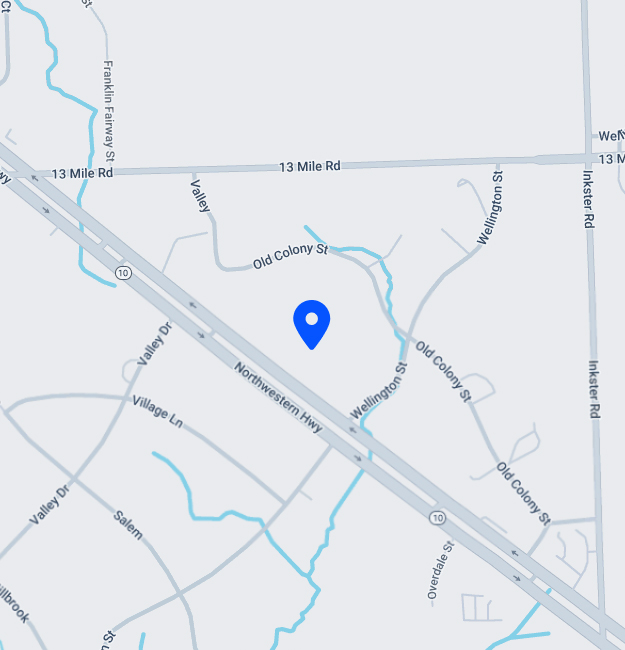
We are located in Farmington Hills, Michigan and serve clients throughout the metropolitan Detroit area, including Wayne, Oakland, Macomb, Livingston, Genesee and Washtenaw counties.


