
You Focus on Recovery,
We’ll Focus on the Fight
We’ll Focus on the Fight






On May 30, 2019, the Michigan Legislature passed, and Governor Whitmer signed, sweeping changes to the Michigan No-Fault law under the guise of substantial savings to purchasers of No-Fault insurance in the State of Michigan. The law provides for options in the amount of no-fault coverage that can be purchased, significantly caps certain benefits, precludes coverage for individuals previously covered, and allows insurance companies to manipulate their own insured’s claims to their own benefit. Below, we explain the different No-Fault coverage options and some things you should know when renewing or purchasing a new automobile insurance policy.
Before this legislation was passed and signed, persons covered under a Michigan automobile insurance policy had unlimited PIP coverage for all reasonable charges incurred for reasonably necessary products, services, and accommodations for an injured person’s care, recovery, or rehabilitation. This coverage could last a lifetime, depending on the severity of injuries. Things have now changed and motorists now have the following options:
It is our opinion that everyone should maintain unlimited coverage for at least the following reasons:
PIP insurance is much more comprehensive coverage than most health insurance policies. In addition to covering medical expenses, PIP also provides coverage for Attendant Care (assistance with activities of daily living, i.e., nursing-type services), housing modifications, vehicle modifications, and catastrophic loss coverages, including long-term rehabilitation and custodial care. Moreover, some health insurance policies only cover a limited number of appointments for services like physical therapy and chiropractic care. In fact, many health insurance policies do not cover automobile accidents at all. So, if you were thinking that you could reduce your premium by shifting everything to your health policy now, you may have limited accident coverage or no coverage at all for automobile accident injuries.
Anyone who has been hospitalized knows just how expensive that can be and how important insurance is in paying the bills. In our office alone, we have had many clients involved in serious crashes that have incurred expenses of hundreds of thousands, and even millions, of dollars. Imagine reducing your coverage to only $250,000 and then being involved in a serious automobile accident. Let’s say your medical expenses were to exceed $750,000. Your auto insurer will only pay the coverage you elected, so guess who will pay the remaining $500,000 balance? If you were at fault for the accident and had no other available insurance, you personally would be responsible for paying the additional $500,000. If you were not at fault, you can now try to sue the at-fault driver for the remainder, but the amount you could recover will depend on how much coverage that driver elected to purchase. If that driver elected the $50,000 option and you could recover the entire policy, you would still be stuck owing $450,000. This scenario is virtually impossible if you maintain unlimited coverage. In our opinion, the modest reduction in your medical premium does not justify risking your health and finances if you are unfortunate enough to suffer serious injuries in an automobile accident.
While consumers may see modest decreases in the PIP portions of their policies, the law raises the minimum bodily injury liability coverage from $20,000 to $250,000. While this was a much-needed change, it is also a 1,250% increase in mandated coverage. Obviously, the insurance companies will charge more for this coverage, ostensibly setting off any decreases in the PIP portion of your policy should you choose lesser coverage.
Before these laws were enacted, you could only sue an at-fault driver for what is called pain and suffering, i.e., compensation for the harm suffered in the crash. All of your economic losses (out-of-pocket losses) were covered under your own PIP insurance policy. Now, should you choose something other than unlimited coverage, you will need to sue the at-fault driver for the excess out-of-pocket expenses.
Let’s say another driver blew through a red light at 13 Mile & Orchard Lake and t-boned your vehicle at 50 mph, causing you to suffer horrible injuries. Your medical bills following the accident totaled $300,000, but you had elected the $50,000 PIP option. Let’s also say the at-fault driver elected the minimum $250,000 liability coverage. This means you must sue the at-fault driver to recover the remaining $250,000 you owe in medical bills. If you are successful, you will recover the whole $250,000 to pay off your bills, leaving no insurance available to compensate you for pain and suffering. If you kept unlimited coverage, all your bills, no matter how much, would be paid by your own insurance company, and the entire $250,000 policy of the at-fault driver would be available to compensate you for the harms suffered in the accident.
When it comes time to renew your automobile insurance policy or if you change insurance companies, your agent most likely will try to sell you a managed care option for a reduction in your premium. What is “Managed Care” The option, defined in the statute, “includes, but is not limited to, the monitoring and adjudication of an injured person’s care, the use of a preferred provider program or other network, or other similar option.” MCL 500.3181. This means the insurance company can choose your doctors and dictate the treatment you receive and for how long. Since insurance companies are all about making a profit, we believe this is a blatant conflict of interest that no insured should ever choose.
Insurance companies routinely sent their injured insureds for what they like to call “Independent Medical Evaluations (IMEs).” These IMEs are anything but “independent,” however. Almost all the doctors chosen by insurance companies to perform these examinations do so only at the request of insurance companies or employers. Moreover, the insurance industry pays hundreds of thousands of dollars a year to these doctors to obtain the medical opinions needed to terminate benefits to an injured insured.
In our decades of fighting the insurance companies, 99% of these IMEs will say our injured accident victims had no injuries, or that any injuries were not caused by the accident. Almost every report ever received by any of these doctors will say something like, “I find no objective evidence of injury, but if injury did occur, it should have resolved within 6 weeks to 3 months after the accident.”
The point is, that you do not want doctors whose pockets are lined by the insurance industry dictating your medical care. They are beholden to the insurance industry and will prostitute themselves and shun their oaths as doctors to appease the insurance industry at the expense of your health. It is our advice that you decline any offer of managed care when obtaining or renewing your automobile insurance policy.
We believe there is no upside to choosing any option other than unlimited PIP coverage when purchasing or renewing your automobile insurance policy. Any option other than unlimited PIP can potentially put your health and financial future at great risk. In addition, since you can now be sued for payment of medical expenses not covered by another driver’s insurance, it is also important to consider increasing your liability coverage as much as possible. You may also wish to consider an umbrella policy if you cause catastrophic injuries in an automobile accident. Finally, if you are offered an option for “managed care,” ask yourself if you trust your own doctors or the insurance company to have your best interests in mind. I think we all know the answer to that question.
For a thorough and free case review of personal injury and accident cases in Farmington Hills and throughout the State of Michigan, click here or simply call 248-865-7740.
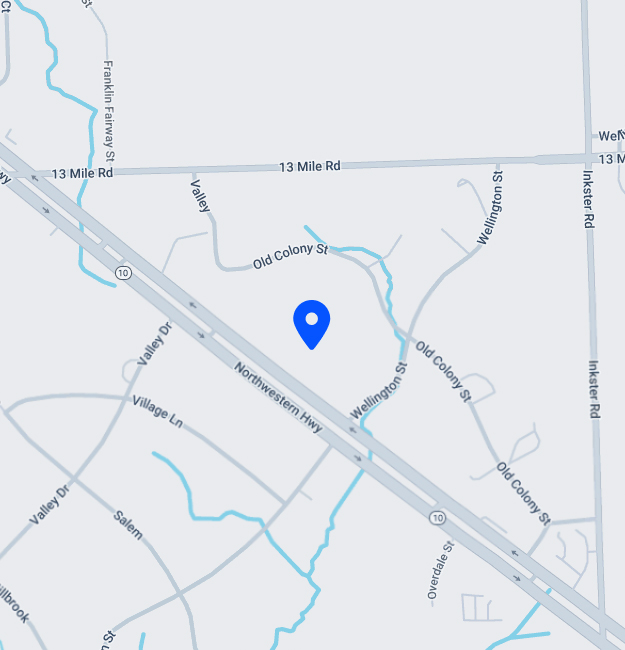
We are located in Farmington Hills, Michigan and serve clients throughout the metropolitan Detroit area, including Wayne, Oakland, Macomb, Livingston, Genesee and Washtenaw counties.


