
You Focus on Recovery,
We’ll Focus on the Fight
We’ll Focus on the Fight



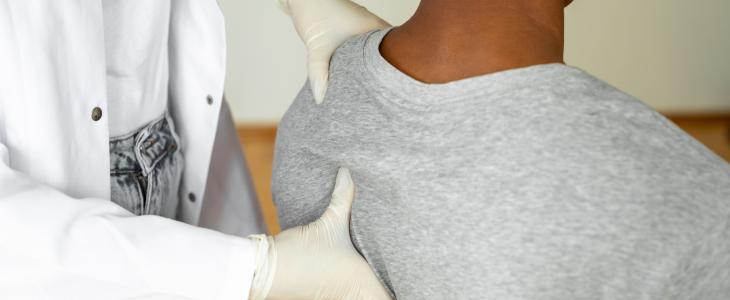
If you suffered a back injury or pinched nerve in a crash on I-696 or elsewhere in Michigan, the Davis Law Center can help prove causation to insurance companies to secure the compensation you deserve. For over 30 years, the Davis Law Center has recovered millions for our clients who have herniated a disc or injured their back in an accident. Contact an experienced Metro Detroit herniated disc lawyer at the Davis Law Center now to schedule your no-obligation, free consultation today.
In a split second, the violent force of a car accident can change the trajectory of your life. Whether it’s a high-speed collision on M-5 or a “minor” rear-end impact on Farmington Road, the physics of a crash—sudden acceleration, deceleration, and compression—often results in the spine absorbing thousands of pounds of pressure.
This pressure frequently leads to a herniated or “slipped” disk, a condition where the soft, jelly-like center of a spinal disk (the nucleus) pushes through a tear in the tougher, rubbery exterior (the annulus).
There are three main types of herniated disk injuries:
Under Michigan No-Fault Law (specifically MCL 500.3135), suffering from back pain isn’t enough to secure a settlement for pain and suffering. To win your case, your injury must meet the definition of a serious impairment of body function:
Objective Manifestation
The first criterion for recovery is that the impairment must be “objectively manifested.” This means your herniated disk must be observable or perceivable by someone other than you—usually through diagnostic imaging. At Davis Law Center, we work closely with medical experts to document your injury using:
Important Body Function
Your herniated or bulging disc must also result in an impairment to an “important body function.” In our opinion, almost any body function is important but things like movement of your neck and back have been determined to be “important body functions” as a matter of law.
General Ability To Lead Your Normal Life
Finally, the impairment(s) must also affect your “general ability to lead your normal life.” This means that the impairment has affected some of the person’s capacity to live in their usual manner. Importantly, there is no temporal requirement for how long an impairment must last, and it requires comparison of the injured person’s life before and after the incident.
It is common for accident victims to feel only minor stiffness or “adrenaline-masked” soreness immediately after a crash and tell responding emergency personnel that they are not injured. However, as inflammation builds over the following days or weeks, a herniated disk can begin to cause:
We see this quite often in our practice, and it is certainly no bar to our winning compensation for our clients.
Strategic Note: If you wait too long to seek a medical diagnosis, insurance companies will claim your herniated disk was caused by “normal aging” rather than the accident. Establishing a medical paper trail early is the most important step you can take to protect your legal rights.
If you have been diagnosed with a herniated disk after a car accident, you may hear the insurance adjuster or defense attorney use a common phrase to deny your claim: “Degenerative Disk Disease” (DDD).
This is a favorite tactic used by insurance companies to avoid paying settlements. They will point to your MRI and argue that because your spine shows signs of wear and tear—something that occurs naturally in almost every adult over the age of 30—the accident didn’t “cause” your injury.
At Davis Law Center, we know this is a bunk argument. Here is how we fight back:
Michigan law follows a legal principle known as the “Eggshell Plaintiff” Rule. This doctrine states that a defendant (the at-fault driver) must “take their victim as they find them.”
In plain English: If you had a “fragile” back or an underlying condition that was not causing you pain, and an accident triggered that condition or made it much worse, the at-fault driver is still 100% responsible for the damages. You are not penalized for being more susceptible to injury than a 20-year-old athlete.
The insurance company wants you to believe that if the injury wasn’t 100% “new,” it isn’t covered. That is incorrect. Michigan personal injury law allows you to recover compensation for the aggravation or exacerbation of a pre-existing condition. In fact, in such cases, a jury will be instructed to award damages for the aggravation of pre-existing conditions.
We prove your case by focusing on the “Baseline”:
We don’t let insurance adjusters play doctor. We work with leading Michigan radiologists and spinal experts to review your MRI films. Often, an expert can distinguish between chronic “wear and tear” and acute trauma from a collision, such as specific bone bruising or the sudden displacement of disk material.
Note from Neil Davis: “Don’t let a ‘degenerative’ diagnosis scare you. Most people have some level of disk degeneration without even knowing it. If you were functional before the crash and are in pain now, the law is on your side. We have spent over 30 years proving exactly that.”
Frequently Asked Questions: Michigan Herniated Disc Claims
There is no single “average” because settlements depend on insurance coverage limits and the severity of the impact on your life. However, in Michigan, settlements for moderate herniated disk injuries often range from $50,000 to $300,000, while cases requiring spinal fusion or resulting in permanent disability can exceed $500,000 to $1 million+. The final value is heavily influenced by whether you meet the “serious impairment” threshold required for a pain and suffering claim.
Yes, it often does, but it isn’t automatic. To sue an at-fault driver for pain and suffering (Non-economic Damages), Michigan law (MCL 500.3135) requires your impairment to be (1) “objectively manifested”—meaning it shows up on tests like MRIs or CT Scans and/or can be perceived by someone other than yourself, (2) the impairment must be to an important body function (i.e. moving your neck or back) and (3) the impairment must affect your ability to lead your normal life. We specialize in documenting how your back injury has specifically limited your work, hobbies, and daily routines to meet this legal threshold.
Absolutely. Insurance adjusters frequently try to blame car accident injuries on “degenerative disk disease” or age. However, Michigan law allows recovery for aggravation of pre-existing conditions. If a car accident aggravated or accelerated a dormant back condition, making it symptomatic or worse, you are entitled to compensation for that change in your health and lifestyle.
Insurance companies often use the word “bulge” to make an injury sound minor. In reality, a bulging disk can cause the same debilitating nerve impingement (sciatica) and chronic pain as a herniated disk. If the “bulge” was caused or worsened by the accident and interferes with your ability to work or move, it is a valid basis for a personal injury claim in Michigan.
You generally have three years from the date of the accident or incident to file a “Third-Party” lawsuit against the at-fault driver or negligent wrongdoer for pain and suffering. However, for “First-Party” Automobile No-Fault benefits (like medical bills and lost wages), you must file a written notice of injury with your insurance company within one year. Because spinal injuries often take months to show their true severity, it is vital to contact an attorney early to ensure all deadlines are met.
At the Davis Law Center, we know that a herniated disk is more than just a “back injury”—it is a life-altering event that affects your ability to work, sleep, and care for your family. You shouldn’t have to fight the insurance companies alone while you are trying to heal.
At Davis Law Center, we offer more than just legal advice; we offer a clear path forward. When you contact us, you get:
In Michigan, the clock starts ticking the moment your accident happens. Whether you are dealing with a “degenerative” denial or are just starting your recovery, we are ready to take the heavy lifting off your shoulders.
See What Your Case Is Worth. Call (248) 865-7740 Now
“Neil was on my case before I ever left the scene of my accident. He got me the money I deserved and made sure I was seen and heard.” — Verified Client Review
Davis Law Center: your trusted partner for personal injury accident cases. Serving Detroit, Farmington Hills, Southfield, Macomb County, Wayne County, Oakland County, and all of Michigan.
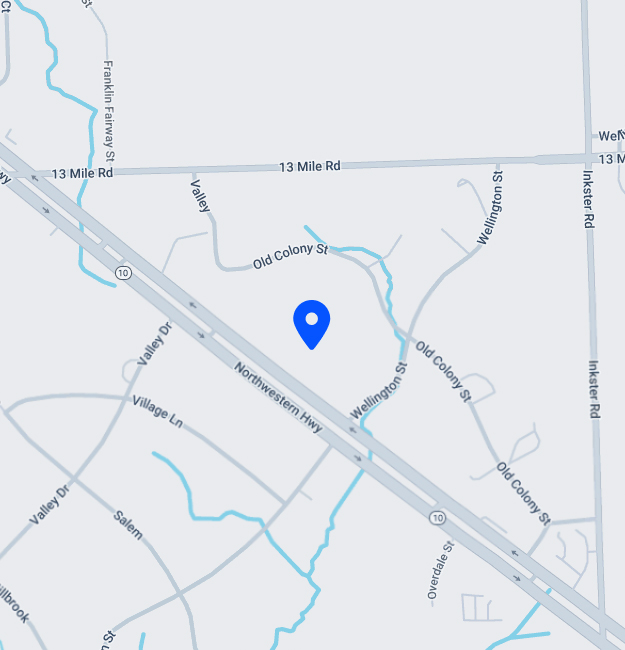
We are located in Farmington Hills, Michigan and serve clients throughout the metropolitan Detroit area, including Wayne, Oakland, Macomb, Livingston, Genesee and Washtenaw counties.


