
You Focus on Recovery,
We’ll Focus on the Fight
We’ll Focus on the Fight




The Michigan No-Fault Insurance Law was enacted to ensure prompt payment of specific benefits to individuals injured in motor vehicle crashes, regardless of fault. These benefits, referred to as “No-Fault” and/or “PIP” benefits, function similarly to health and disability insurance. They offer coverage for the injured individual and their family, whether the injury occurred in their own vehicle, another’s vehicle, or as a pedestrian.
To qualify for no-fault coverage, the injury must result from an accident involving a motor vehicle, typically defined as a vehicle with more than two wheels, powered by a source other than muscular energy, and designed for operation on public highways.
In Michigan, Personal Injury Protection (PIP) is the core of your No-Fault policy. While all motorists used to have unlimited PIP coverage, you now have six choices:
Why do we recommend unlimited coverage? It’s simple really. With the cost of medical care skyrocketing, a seriously injured auto accident victim could easily blow through lesser coverages in a short period of time. Once those limits are reached, you will be personally responsible for any unpaid bills and any future care your require. Don’t gamble with your health and finances simply to save a few bucks.
Uninsured Vehicle Owners: Individuals injured while operating or occupying an uninsured vehicle they own are excluded from benefits.
Motorcyclists: Motorcycles, being two-wheeled vehicles, are generally excluded. However, if a motorcycle collides with a motor vehicle, no-fault coverage may apply, typically through the motor vehicle’s insurer.
Michigan No-fault benefits are generally associated with the policyholder rather than the insured vehicle. That means if you are injured in a motor vehicle crash, your own insurance policy will be responsible for paying benefits, regardless of who was at fault. This coverage typically extends to the policyholder, the policyholder’s spouse, and relatives residing in the same household. In the rare case that there is no applicable coverage, the Michigan Assigned Claims Plan (MACP) steps in. The MACP will then assign an insurer to provide no-fault benefits, ensuring that you are not left without the necessary economic support in the event of an accident. However, depending on the situation, benefits for reasonably necessary products, services, and accommodations for an injured person’s care, recovery, or rehabilitation may be capped at only $250,000 due to changes in the law enacted in 2019.
We advise our Michigan clients to apply for no-fault benefits as soon as possible. To start the process, you must notify the appropriate insurer within one year of the crash. This notice should include details such as the time and location of the crash, the nature of injuries, and a claim for benefits. Most insurance companies have a standard form, called an “Application for Benefits,” to assist with notice requirements. In addition to the application, insurance companies use other forms. A “Wage Verification” form may need to be signed by your employer if you are unable to work following a crash. A disability slip or “Attending Physician’s Report” may also be needed to verify your inability to work and/or need for assistance following the accident. It’s important to note that failure to submit a completed application within the required timeframe could result in denial of benefits. We at the Davis Law Center can assist with this process if needed.
The insurer covers reasonable expenses for necessary care, recovery, or rehabilitation. Coverage includes things like hospital stays, medical services, therapy, prescriptions, transportation for medical care, and attendant care (home nursing services). The amount of coverage for these types of benefits will depend on the amount of coverage you selected. We recommend all our Farmington Hills neighbors purchase unlimited coverage because you never know when you might be involved in a serious injury accident. Moreover, the cost for unlimited coverage is really not much more on most policies.
“Attendant Care” is basically home nursing-type services that may include supervision, physical transfers, assistance with bathing, grooming, toileting, and medication management, among others. Attendant care provided by someone other than through an outside agency is limited to 56 hours per week and is usually paid at an hourly rate. In some situations, additional hours may be contracted for with the insurance company.
Claimants may seek reimbursement for traveling to and from medical appointments. This may be paid per mile to the insured or to a transportation company.
Michigan No-Fault (PIP) Policies provide a minimum of $1,750 for funeral expenses, with optional coverage up to $5,000.
No-fault policies compensate for lost wages up to 85% of the injured person’s income, subject to a monthly cap adjusted annually. Benefits are payable for up to three years from the date of the crash.
Dependents of individuals killed in accidents may receive benefits for lost income and certain expenses for up to three years, subject to the same monthly cap as wage loss benefits.
Up to $20 per day is available for three years to cover household tasks the injured or deceased individual would have performed had the injuries not been sustained in a crash. These tasks may include cooking, cleaning, childcare, yard work, snow removal, etc.
Michigan PIP policies may offer coordinated or excess medical coverage at a reduced premium, allowing policyholders to lower their insurance costs. Under these policies, claimants must first use their existing health insurance benefits for medical expenses arising from a motor vehicle crash. They can only seek reimbursement for remaining or uncovered costs from their no-fault insurer after exhausting the benefits provided by their health insurance plan.
Once the health insurer has processed the claims, whether through partial payment, denial, or coverage limitations, the claimant can then submit any outstanding expenses to the no-fault insurer for reimbursement. For example, if a claimant’s health insurance limits physical therapy to a certain number of visits or excludes specific treatments, the no-fault insurer would cover those expenses not handled by the health insurance plan. Claimants must provide documentation, such as explanations of benefits (EOBs) or denial letters from their health insurer, to demonstrate that health insurance benefits have been fully utilized.
Policyholders need to understand the terms and conditions of their coordinated or excess medical coverage. We recommend that everyone carefully review their health insurance plans to identify any exclusions or limitations that may affect their ability to obtain full reimbursement.
If an insurance company disputes or delays paying PIP claims, Michigan accident victims must file a lawsuit within one year of when the insurance company formally denies payment of a disputed claim. For instance, if you were in a crash and hospitalized at Providence Hospital on February 5, 2026 and State Farm refused to pay the bill, a lawsuit would need to be filed before February 5, 2027. At the Davis Law Center we see insurance companies denying legitimate PIP claims almost on a daily basis and routinely sue them. In some cases, and in addition to recovering unpaid benefits, interest and attorney fees can also be awarded. This can occur if it is determined that the insurance company failed to pay a certain benefit in a timely manner and/or that the failure to pay was unreasonable.
Under specific conditions, individuals may sue a negligent driver for non-economic damages (e.g., pain and suffering) and certain economic damages. To pursue a claim, the injured party must demonstrate that the other driver was at least 50% at fault and that the crash resulted in death, permanent disfigurement, or a “serious impairment of a body function.”
The concept of “serious impairment of body function” was clarified in the Supreme Court’s McCormick v. Carrier case and later codified by the Michigan legislature. Now there are specific guidelines for determining whether an injury meets the serious impairment threshold in Michigan car accident cases. A car crash injury qualifies as a “serious impairment of body function” if it impacts an important body function (a function that is of great value, significance or consequence to the injured person), the impairment is objectively observable (meaning it is observable or perceivable by someone other than the injured person), and it affects the person’s ability to lead their normal life, i.e., it had an influence on some of the person’s capacity to live in his or her normal manner of living. The court emphasized that the focus is on how the impairment affects the individual’s daily activities compared to before the accident, not just the severity of the impairment. For example, if someone suffers an objectively diagnosed back injury that prevents them from working, exercising, or caring for their family as they did before, it should be considered a serious impairment under this standard.
Third-party lawsuits must generally be filed within three years of the accident. Failure to file within three years will bar any recovery for injuries sustained in a Farmington Hills or Michigan car crash.
Michigan law permits clients to hire attorneys on a contingent-fee basis. This means that in most cases, the client does not pay any money up front and the attorney takes all the risk. Upon recovery, the attorney would get his or her costs reimbursed and take a 1/3 attorney fee. We never charge a fee at the Davis Law Center if we somehow don’t win for our clients.
Compensation for personal injury claims, including no-fault benefits and pain and suffering awards, is generally non-taxable. However, interest awarded by the court is subject to income tax.
Michigan’s No-Fault law is some of the most complex in the country, and this is meant to be a summary of the basics of the No-Fault Act. We would be more than happy to answer more complicated questions. Contact the Davis Law Center anytime with any questions you may have if you or a family member has suffered personal injury in a car, truck, motorcycle, or pedestrian accident.
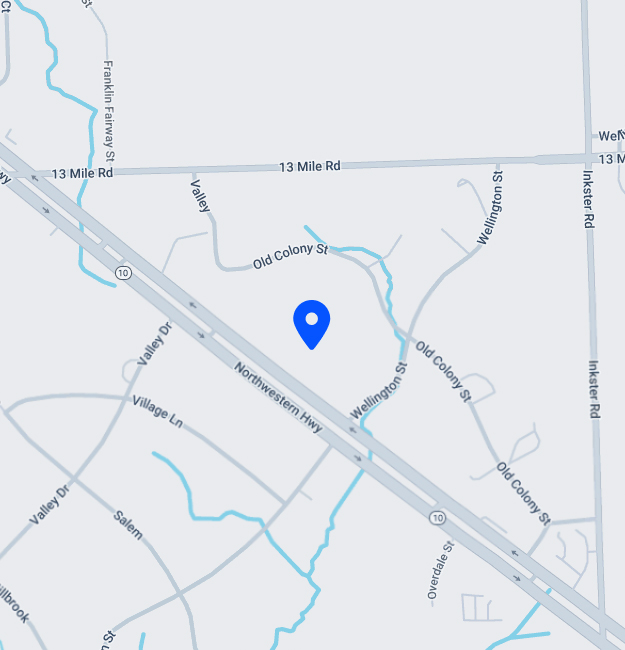
We are located in Farmington Hills, Michigan and serve clients throughout the metropolitan Detroit area, including Wayne, Oakland, Macomb, Livingston, Genesee and Washtenaw counties.


