
You Focus on Recovery,
We’ll Focus on the Fight
We’ll Focus on the Fight




Many types of serious accidents can easily cause victims to suffer broken bone injuries. Depending on the severity of the injury, a broken bone may require an accident victim to undergo extensive and expensive medical care. The injury may also keep them out of work or unable to return to their job, disrupting their ability to perform daily tasks or participate in activities they enjoy.
If you suffered a bone fracture in an accident someone else caused, you deserve the support you need to seek financial compensation. Contact Davis Law Center, your Farmington Hills broken bone injury lawyer, for a free initial case evaluation. Neil Davis, president of Davis Law Center, is a lifetime member of the Million Dollar Advocates Forum and recognized as a National Top 100 Trial Lawyer. For over 30 years, the Davis Law Center has offered legal support and guidance to residents in Farmington Hills and throughout Michigan. We cover every aspect of your case so you can focus on your recovery.
Not all broken bones are the same, and insurance companies often downplay fractures as minor injuries or just a “simple break” to devalue valid claims. Unlike insurance adjusters, however, doctors classify broken bone injuries by the fracture pattern or the direction and shape of the break. These can be “open” or “closed” fractures. An open fracture (also known as a compound fracture) means the bone has broken through the skin, increasing the risk of infections and medical complications. A closed fracture means the broken bone has not punctured the skin. Doctors may also describe broken bones as “displaced,” meaning the broken part of the bone has moved enough to create a gap. A “non-displaced” fracture means the broken parts of the bone have stayed in alignment.
In our practice, the common fracture patterns and treatments we see include:
| Fracture Type | Characteristics | Typical Treatment Approach |
| Oblique | Break at an angle across the bone | Often requires reduction (realignment). If displaced, internal fixation (plates/screws) is common. |
| Transverse | Break in a straight line across the bone | Immobilization (cast/splint) for non-displaced; surgery for unstable or displaced breaks. |
| Greenstick | Bone bends and cracks (common in children) | Immobilization in a cast or splint is standard as the bone is not fully broken through. |
| Comminuted | Bone breaks into three or more pieces | Usually requires surgery (internal/external fixation) to realign the multiple fragments. |
| Segmental | Bone is broken in two places, leaving a “floating” segment | Almost always requires surgery to realign the segments and secure them with hardware. |
| Spiral | Break spirals around the bone (often from twisting). | Closed reduction or surgical internal fixation, followed by immobilization. |
Doctors also classify broken bone injuries based on the cause of the fracture. Common types of orthopedic fractures include:
While many fractures heal fully within a few months, severe breaks (compound bone fractures)—particularly those that involve joints, multiple fragments (comminuted), or displaced bones (segmental)—can lead to complications that persist long after the bone has mended. For our clients, these long-term consequences often affect their physical, neurological, and emotional well-being for years.
The most common long-term effects stem from the physical changes at the injury site and the surrounding joint structure.
Severe fractures often involve high-energy trauma that affects more than just the bone.
Sometimes, the biological process of bone repair is interrupted, leading to permanent anatomical changes.
The long-term effects of severe injury extend beyond the physical realm.
At the Davis Law Center, we know that calculating the value of a broken bone injury claim goes far beyond just adding up your hospital bills. Because fractures—especially complex ones—often have “invisible” long-term consequences, a proper claim must account for the full financial and personal impact on your life.
In Michigan, your potential recovery is generally categorized into two distinct types of damages:
These are the “tangible” costs that can be proven with invoices, pay stubs, and expert financial projections.
Non-economic damages compensate for the human experience of the injury. Since there is no “price tag” for pain, we use evidence to demonstrate the severity of your impact.
At the Davis Law Center, we don’t just ask for what you’ve spent; we fight for what you’ve lost. If you’ve suffered a fracture in Farmington Hills, let us review your medical records and provide an honest assessment of your case’s potential value.
Fractures can occur in any number of ways, but the more common ways our Farmington Hills clients suffer these types of injuries are from:
After breaking a bone in an accident caused by another party’s carelessness, you can pursue compensation for your ongoing and future expenses and losses, including:
A: While you can technically manage a claim on your own, insurance companies often minimize fracture injuries to save money. We investigate the long-term impact of your injury—such as potential arthritis or future surgical needs—to ensure your settlement reflects the true cost of your recovery.
A: Every case is unique. The value depends on the severity of the fracture, the impact on your ability to work, and the long-term prognosis.
A: A simple (or closed) fracture is a clean break that stays under the skin. A complex fracture (such as comminuted or segmental) involves multiple pieces, joint involvement, or damage to surrounding nerves and vessels. Complex fractures almost always carry higher settlement values due to the extensive medical care required.
A: If your fracture resulted from a car accident, your No-Fault PIP benefits cover immediate medical bills and wage loss. However, if those benefits have caps or limitations, or if you have significant pain and suffering, we may pursue a third-party claim against the at-fault driver to recover the “excess” damages.
A: Absolutely. Even if a fracture is treated with only a cast or splint, it can still cause long-term pain, stiffness, and time away from work. You are entitled to be compensated for all accident-related losses, regardless of whether your treatment was surgical or non-surgical.
A: Michigan has strict statutes of limitations for personal injury claims. If you miss these deadlines, you may lose your right to compensation forever. While most personal injury cases have a 3-year statute of limitations, it is vital to consult with an attorney as soon as possible to ensure your rights are protected.
When you’ve sustained a broken bone injury in an accident in Farmington Hills, MI, due to someone else’s negligence, the Davis Law Center will provide the legal assistance you need to demand accountability and justice. Contact us today to get started with a no-obligation, free consultation with an experienced Farmington Hills broken bone attorney.
Davis Law Center: your trusted partner for personal injury accident cases. Serving Detroit, Farmington Hills, Southfield, Macomb County, Wayne County, Oakland County, and all of Michigan.
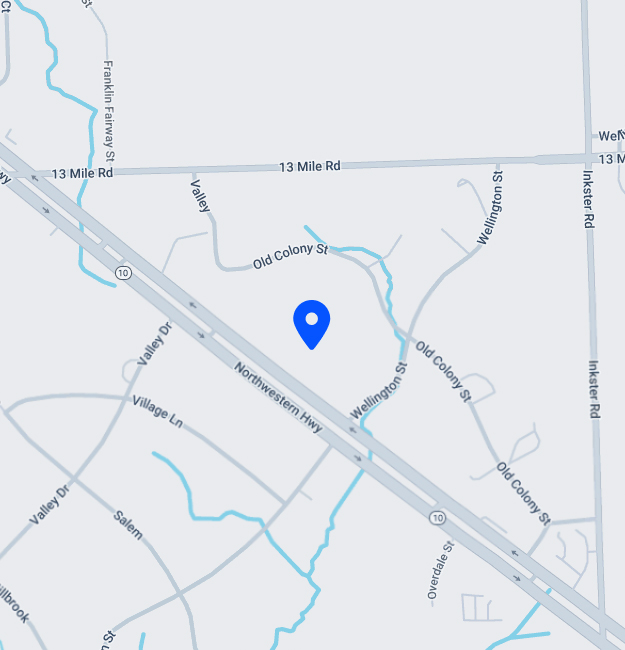
We are located in Farmington Hills, Michigan and serve clients throughout the metropolitan Detroit area, including Wayne, Oakland, Macomb, Livingston, Genesee and Washtenaw counties.


